Fractal Funnels: Layering Micro-Conversion Signals to Align PPC and Content Pathways in Licensed Gambling Markets
Written by Alex Walter · Sep 18, 2026
Fractal Funnels: Layering Micro-Conversion Signals to Align PPC and Content Pathways in Licensed Gambling Markets
Operators in licensed gambling markets have adopted fractal funnels as a structured method for organizing conversion data across multiple touchpoints. These funnels treat each small action such as a scroll depth, video completion, or form field entry as a repeating pattern that builds toward larger outcomes. Researchers tracking digital behavior note that this layering creates pathways where paid search traffic meets editorial or promotional content without abrupt shifts in user experience.
Defining Micro-Conversion Signals in Regulated Settings
Data from multiple jurisdictions shows that micro-conversion signals include time on page, interaction with responsible gaming tools, and click-throughs on compliance disclosures. These elements sit inside broader funnels and repeat at different scales, much like the self-similar structures that give the approach its name. According to reports issued by the New Jersey Division of Gaming Enforcement, sites that monitor these signals achieve clearer alignment between advertisement clicks and subsequent content consumption.
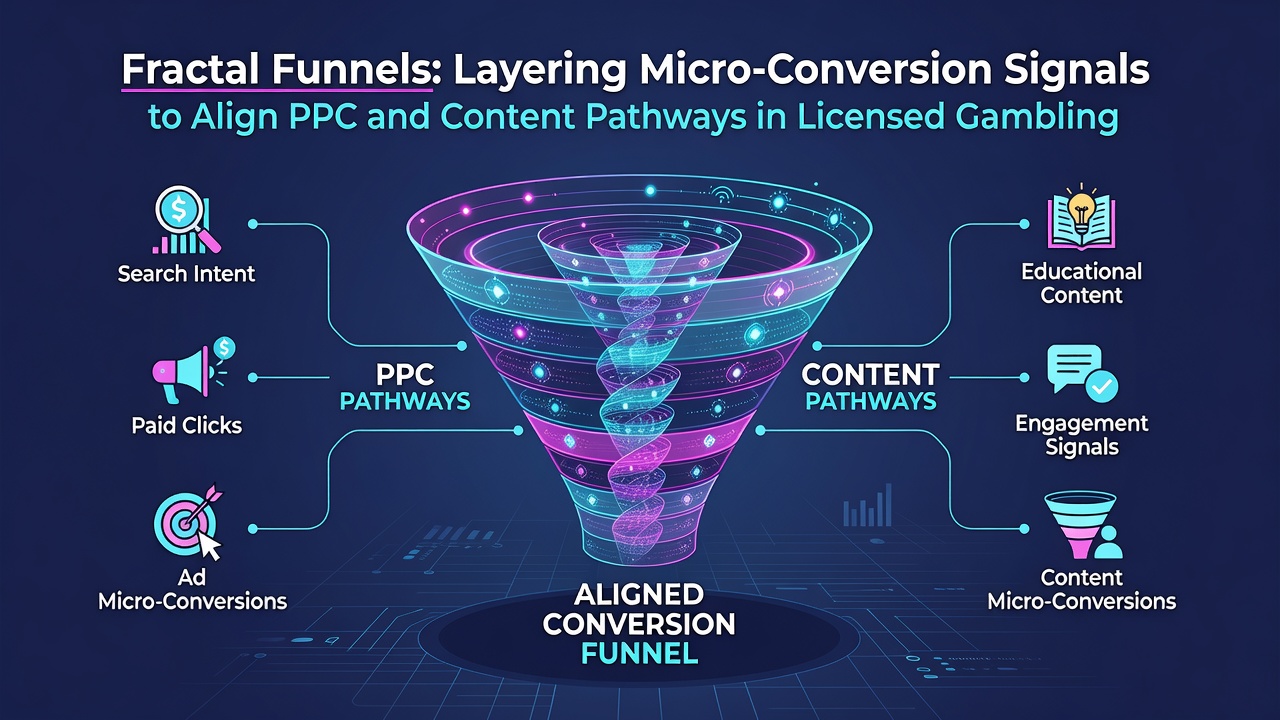
Analysts have mapped how a user who pauses on a bonus explanation video often proceeds to review game rules next, and that sequence itself becomes another micro-signal. The pattern continues through deposit page views and session duration metrics. Observers note that when these signals stack consistently, the resulting data set allows teams to adjust both PPC bidding rules and content sequencing at the same time.
Connecting PPC Campaigns to Content Flows
Paid search and display campaigns generate initial traffic, yet conversion improves when the landing content mirrors the intent signaled in the ad creative. Teams achieve this match by feeding micro-conversion data back into campaign platforms so that bid adjustments reflect real user progression rather than final deposit events alone. Figures released by state gaming bodies indicate that operators applying this feedback loop record steadier traffic quality across quarterly reporting periods.
Content pathways receive updates through the same data stream. Editors adjust article order, video placement, and call-to-action wording once heat-map and scroll data reveal where users hesitate. The process repeats at each level of the funnel, creating the fractal quality where small adjustments echo through larger structures.
Implementation Patterns Observed Through September 2026
By September 2026 several markets had documented changes in how affiliate and operator sites structure their navigation after analyzing layered signals. One documented approach involves tagging every compliance element as a measurable micro-conversion, then routing that information into both advertising platforms and content management systems. This dual routing reduces the lag between what an ad promises and what a page delivers.
European regulators outside the United Kingdom, including those in Malta and the Netherlands, have published guidance encouraging operators to maintain transparent records of these intermediate signals. The records help demonstrate that advertising spend directs users toward licensed products rather than unregulated alternatives. Industry associations such as the International Association of Gaming Regulators have hosted sessions where members share template taxonomies for labeling these signals without exposing personal data.
Regional Data and Regulatory Context
Canadian provincial authorities have released aggregate figures showing that sites employing layered micro-conversion tracking maintain higher proportions of traffic originating from regulated advertising channels. Similar patterns appear in Australian state reports where operators must separate advertising performance from content engagement metrics. The separation allows regulators to verify that promotional spending stays within approved boundaries while still supporting organic discovery through editorial material.
Academic researchers examining server logs from licensed platforms have identified clusters of micro-actions that precede account verification. These clusters function as early indicators that a visitor has entered a fractal funnel rather than bouncing after the first click. When PPC teams receive alerts based on these clusters, they can reallocate budget toward creative variations that previously produced the same sequence.
Technical Integration Steps
Implementation typically begins with a unified tagging framework that labels both advertising events and content interactions under a single schema. Developers then connect this framework to existing customer data platforms so that downstream content recommendations update automatically. The connection runs in both directions, allowing content performance to influence bid modifiers and advertising results to shape editorial calendars.
Testing occurs through controlled experiments where one audience segment experiences standard funnel reporting while another receives the layered signal version. Metrics tracked include time from click to first micro-conversion, progression rate between layers, and final conversion within the licensed environment. Results from these experiments feed back into the system, reinforcing the repeating structure that defines fractal funnels.
Conclusion
Licensed gambling operators continue to refine fractal funnel models by expanding the range of micro-conversion signals they track and by tightening the feedback loops between PPC platforms and content systems. Data shared through regulatory filings and industry forums indicates that this layered approach produces measurable consistency in how traffic moves from advertisement to verified activity. As reporting periods advance, the same self-similar patterns reappear across different markets and regulatory frameworks, supporting ongoing alignment between paid and organic pathways.